
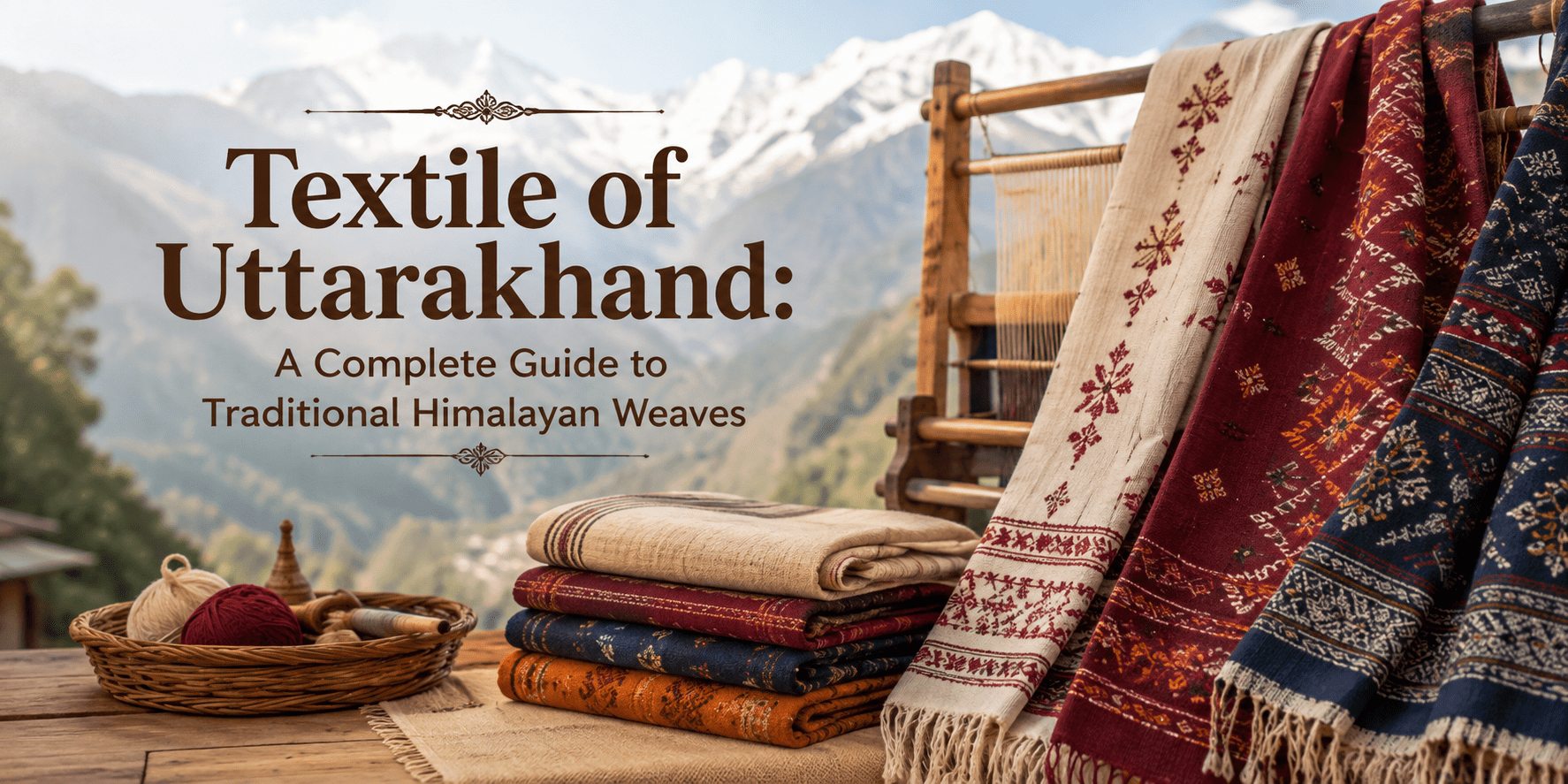
If you’ve ever wrapped yourself in a thick wool blanket on a cold Himalayan night, you’ve already felt what makes the textile of Uttarakhand so special. Long before synthetic fabrics and factory looms arrived, the hill communities of Uttarakhand were spinning wool, weaving cotton, and dyeing threads with whatever the mountains gave them — walnut shells, rhododendron flowers, pomegranate peels. Nothing was wasted, and nothing was rushed.
Every piece of Himalayan handloom fabric carries this same quiet patience. A shawl might take weeks to weave. A blanket might be passed down for two generations before it wears out. That’s the difference between something made and something grown — and it’s exactly why interest in authentic Himalayan textiles is rising again among people tired of mass-produced fabric with no story behind it.
In this guide, we’ll walk through what makes these Himalayan weaves so distinct — the raw materials, the communities behind the craft, the region’s most famous woven pieces, and how art itself gets stitched into fabric here.
Raw Materials Behind the Textile of Uttarakhand
What makes the textile of Uttarakhand genuinely different from mill-made fabric is where it starts — not in a factory, but in the fields and forests around each village.
Wool is the backbone of the region’s weaving tradition. Sheep reared in the colder districts of Chamoli, Pithoragarh, and Uttarkashi produce the wool used for blankets, shawls, and jackets. A finer variety comes from the Pashmina goat (Changthangi breed), found in the higher Himalayan belts — soft, light, and prized for shawls that last for years without losing shape.
Beyond wool, local weavers also work with plant-based fibres. Ringaal, a type of hill bamboo, is flexible enough for baskets and bags. Bhimal fibre goes into ropes and mats. Nettle fibre, once used mainly for fishing nets, now shows up in shawls and home furnishings too — proof that Himalayan weaving traditions have always found a use for whatever the land provides. Even everyday items like the woollen Pahadi topi, a traditional cap worn across the hills, reflect this same resourcefulness — a detail well documented on the Government of India’s Indian Culture portal.
Colour, too, comes from nature. Walnut shells give a rich brown. Rhododendron (locally called burans) produces maroon and brown shades. Pomegranate peels yield warm yellows, and indigo — grown in a few pockets of the state — gives that deep, characteristic blue seen in older Himalayan weaves.
Regional Weaving Traditions: Who Makes the Textile of Uttarakhand
Behind every woven piece is a community that has practiced the craft for generations, mostly passed down through women.
The Bhotiya community, settled in the high-altitude belts of Garhwal and Kumaon, is the most prominent name in Uttarakhand’s wool-weaving. They rear their own sheep and goats and produce pashmina shawls, pankhis, carpets, and blankets almost entirely by hand — using techniques refined over generations of practice in the cold.
In the Jaunsar-Bawar region near Dehradun, the Jaunsari community weaves everyday essentials — mats, ropes, and woollen garments — as part of daily life rather than a separate trade. Their traditional woollen clothing, from the Chora robe to the pleated Ghagra, is itself a form of living textile heritage.
Further south, in the Terai belt of Udham Singh Nagar, the Tharu community brings a different texture altogether — cotton-based, decorative, and embroidery-heavy — producing wall hangings, cushions, and home décor pieces rather than winter wear.
Together, these communities give traditional textiles of Uttarakhand their regional character — wool-heavy and rugged in the mountains, cotton-based and ornamental in the plains. In Kumaon especially, this regional character often shows up through pattern rather than just material, with weavers borrowing motifs straight from aipan art of Uttarakhand to decorate everyday textiles.
Famous Handwoven Textiles You Should Know
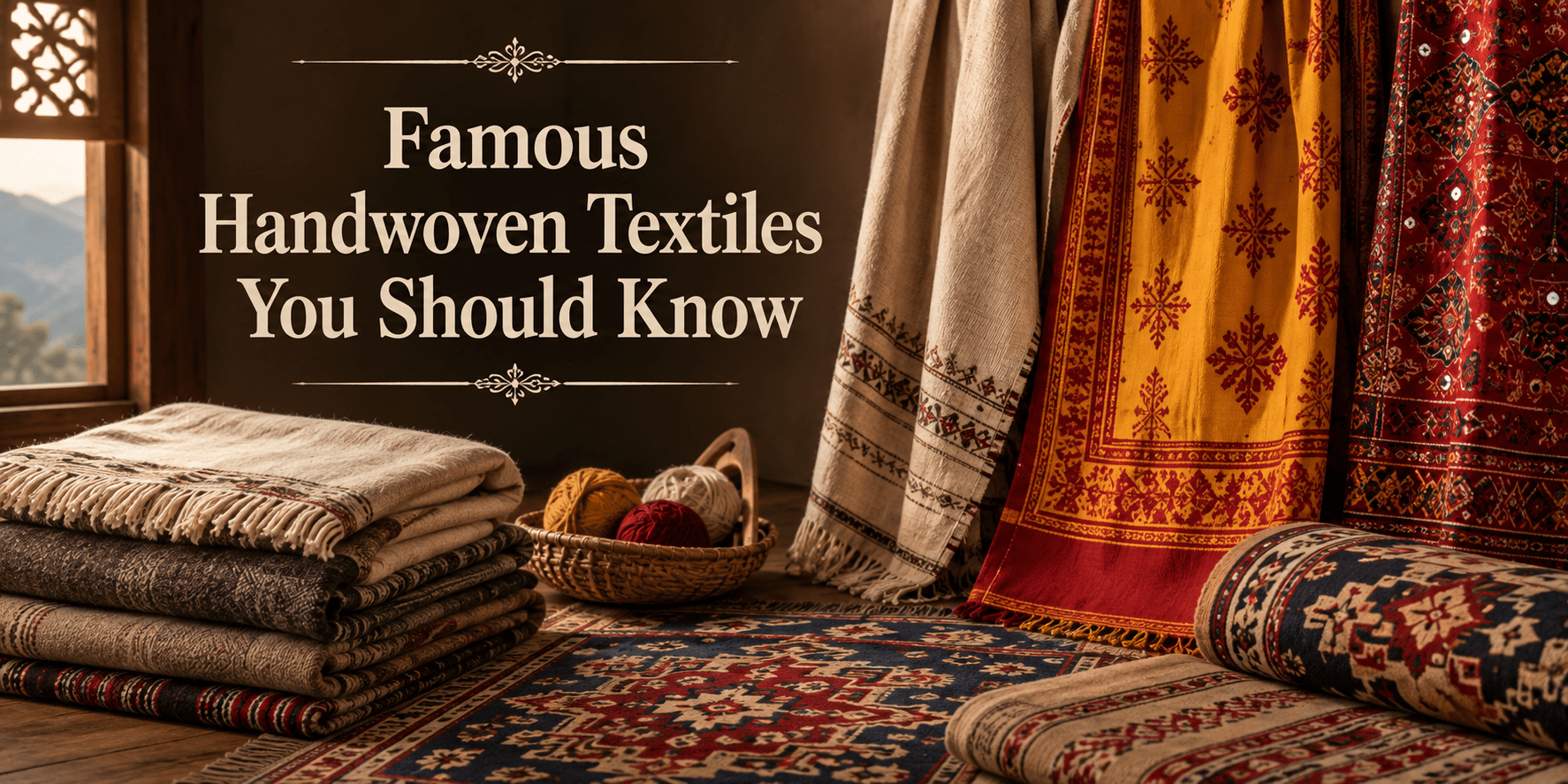
This is where Uttarakhand’s traditional textiles really show their range — from everyday practicality to festive artistry.
Woolen Shawls: Pankhi and Pashmina
The Pankhi shawl is considered a symbol of honour in the hills, often gifted on special occasions. Made from pure sheep wool blended with finer fibres, it’s warm without being heavy — a genuinely Pahadi piece of clothing. Alongside it sits the more globally known Pashmina shawl, woven from Changthangi goat wool and valued everywhere for how light and soft it feels against the skin.
Pichora and Rangwali Pichora
Worn by Kumaoni women during weddings and religious ceremonies, the Pichora is a hand-printed dupatta, traditionally done in just two colours — red motifs against a yellow base. Its more elaborate cousin, Rangwali Pichora, brings in vibrant colour, mirror work, and embroidery, and often borrows design elements from aipan art of Uttarakhand — the same geometric folk patterns you’ll see painted on Kumaoni doorways during festivals.
Thulma Blanket: The Heart of Himalayan Winters
If there’s one textile that defines winter in the hills, it’s the thulma blanket. Made from thick sheep wool, a thulma is heavier and shaggier than a regular blanket — brushed by hand to create a soft, insulating surface that holds warmth far better than most modern alternatives. Traditionally woven by Bhotiya artisans on pit or frame looms, wool is spun into long strips, washed, brushed, and then stitched together into one thick, durable piece.
What makes a genuine thulma blanket worth investing in isn’t just the warmth — it’s the durability. A well-made thulma can last decades with basic care, developing character rather than wearing thin. It’s also completely free of synthetic filling, making it a naturally breathable choice compared to factory-made quilts.
Hand-Knotted Carpets: Dann and Asan
Carpet weaving is another Bhotiya specialty, particularly in regions bordering Tibet. Dann (or Dan) are thick, hand-knotted wool carpets known for their warmth, commonly used as floor coverings in mountain homes. Asan, a smaller mat, is often used specifically for sitting during prayer — a small but meaningful part of household ritual across the hills.
How Aipan Art Shapes Uttarakhand’s Textiles
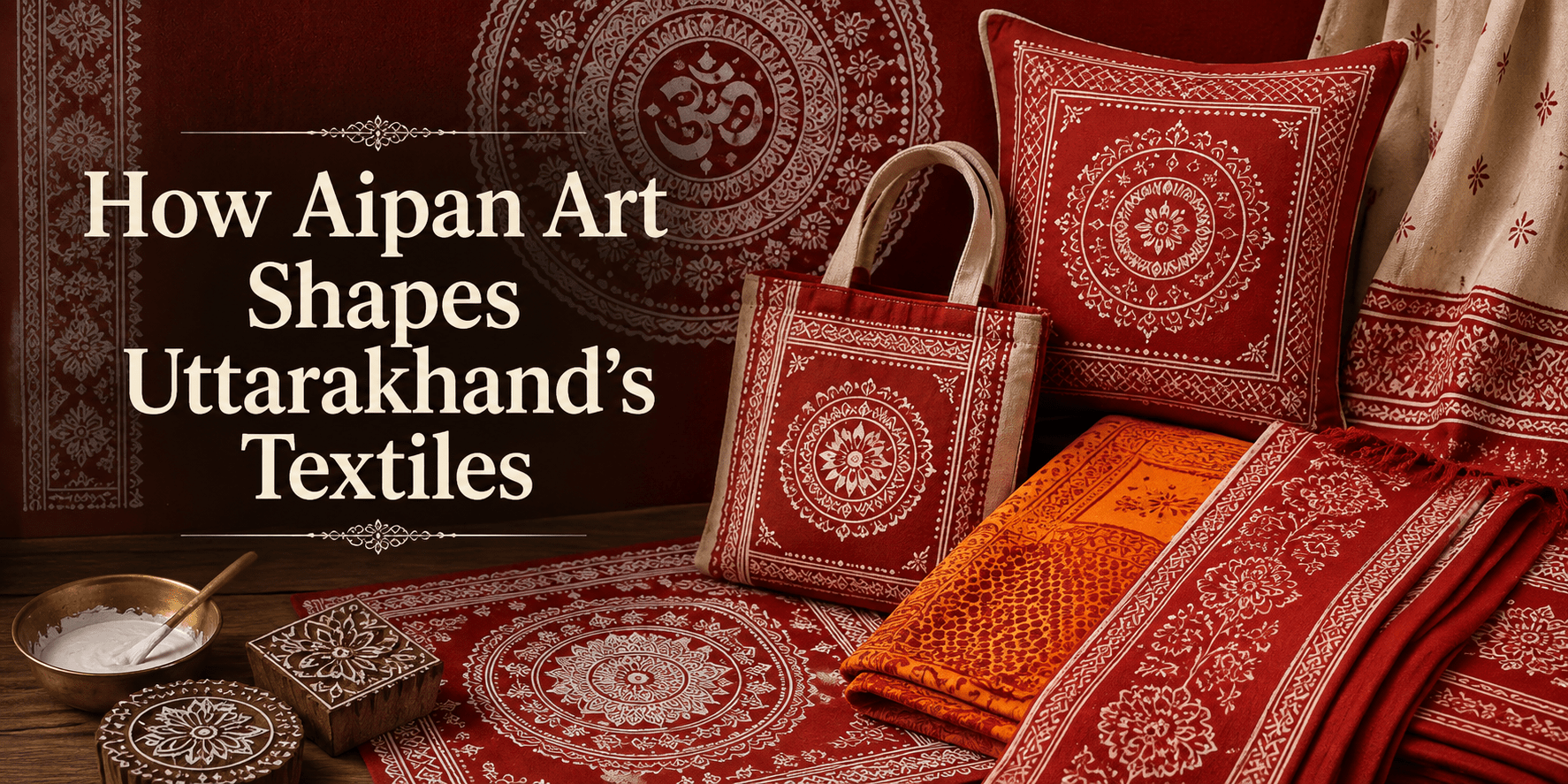
No discussion of Himalayan fabric is complete without mentioning how deeply aipan art of Uttarakhand is woven — quite literally — into the region’s textile identity. Traditionally painted using rice-paste on red ochre walls during festivals like Diwali, Aipan’s geometric, symbolic patterns have moved off walls and onto fabric over time.
You’ll now find Aipan-inspired motifs embroidered onto shawl borders, block-printed onto cushion covers and bags, and worked into the patterns of Kumaoni Pichora. This isn’t a modern gimmick — it’s a natural extension of the same cultural symbolism, just expressed through thread instead of rice paste. If you want to bring this artistry home, Baaduli’s collection of aipan art of Uttarakhand showcases how this centuries-old folk art continues to live on in textile and home décor form.
Textile of Uttarakhand at a Glance
| Textile | Region/Community | Material | Best Used For |
| Pankhi Shawl | Bhotiya, Kumaon/Garhwal | Sheep wool | Everyday warmth, gifting |
| Pashmina Shawl | Bhotiya, high-altitude belt | Changthangi goat wool | Light layering, formal wear |
| Pichora | Kumaon | Cotton/silk | Weddings, religious ceremonies |
| Thulma Blanket | Bhotiya | Sheep wool | Winter bedding |
| Dann Carpet | Bhotiya | Thick wool | Flooring, home warmth |
| Aipan-Printed Textiles | Kumaon | Cotton, mixed fabric | Home décor, accessories |
Why Choose Baaduli for Authentic Uttarakhand Textiles
There’s a real difference between a shawl bought off a shelf and one that comes from a weaver who learned the craft from their mother. At Baaduli, every textile piece is sourced directly from artisan communities across Kumaon and Garhwal, so what you’re buying isn’t just fabric — it’s a continuation of a tradition that’s been kept alive by hand, generation after generation.
Beyond textiles, this same artisan-first approach runs through Baaduli’s entire collection. Our Metal Handicrafts — brass, copper, and iron pieces — are hand-forged by craftsmen using techniques passed down for centuries, while our Grass Handicrafts, made from Moonj grass and bamboo, reflect the same sustainable, hand-made philosophy in everyday home items. Together, these categories tell the same story Uttarakhand’s textile heritage does — that authentic craftsmanship, however it’s made, deserves to be seen, used, and passed on.
Caring for Handwoven Wool Textiles
Handwoven wool needs a little more care than machine-made fabric, but it pays off in longevity. A few basics:
- Air, don’t wash often. Wool naturally resists dirt and odour — airing a shawl or thulma outdoors is usually enough between washes.
- Hand wash only when needed, using mild soap and cool water. Avoid wringing; press out water gently instead.
- Dry flat, away from direct sun, which can fade natural dyes over time.
- Store folded, not hung, in a breathable cotton bag rather than plastic, to prevent moisture buildup and moth damage.
With this basic care, a genuine thulma blanket or wool shawl can easily outlast most modern winter wear.
Bringing Himalayan Craftsmanship Home
The textile of Uttarakhand isn’t just fabric — it’s a record of how hill communities have lived, celebrated, and kept warm for centuries. Every thulma blanket, every Pankhi shawl, every Aipan-inspired print carries a story that a factory simply can’t replicate.
Choosing handwoven Himalayan textiles means choosing authenticity over uniformity, and supporting artisan families who continue this craft against increasing odds. Explore Baaduli’s collection of handcrafted textiles and handicrafts, and bring home a piece of Uttarakhand that’s made to last.
FAQs
Q1. What is the textile of Uttarakhand mainly made from?
The textile of Uttarakhand is primarily wool-based, sourced from sheep and Pashmina goats, along with plant fibres like Ringaal, Bhimal, and nettle for non-woollen items.
Q2. What is a Thulma blanket?
A thulma is a thick, heavy wool blanket traditionally handwoven by the Bhotiya community. It’s brushed to create a soft, warm surface suited to the harsh Himalayan winters.
Q3. What’s the difference between a thulma and a chutka?
Both are traditional wool blankets, but a thulma is typically thicker and shaggier, while a chutka is a slightly lighter, more compact woven blanket, often used as everyday bedding or a rug.
Q4. What is a Pankhi shawl?
A Pankhi shawl is a traditional woollen shawl from Uttarakhand, made from sheep wool and considered a symbol of honour, often gifted during special occasions.
Q5. What is Pichora, and when is it worn?
Pichora is a hand-printed dupatta traditionally worn by Kumaoni women during weddings and religious ceremonies, originally done in red motifs on a yellow base, with an elaborate version called Rangwali Pichora that adds colour and embroidery.
Q6. Which community in Uttarakhand is known for wool weaving?
The Bhotiya community, settled in the high-altitude belts of Garhwal and Kumaon, is the most prominent wool-weaving community in Uttarakhand, producing shawls, blankets, and carpets almost entirely by hand.
Q7. Is Uttarakhand handloom the same as machine-made wool products?
No. Uttarakhand handloom textiles are handspun and handwoven on traditional looms, which makes each piece slightly unique, unlike uniform machine-made fabric.
Q8. How long does it take to weave a traditional Uttarakhand textile like a Thulma or shawl?
Depending on the size and complexity, a handwoven piece can take anywhere from a few days for a simple shawl to several weeks for a full-sized thulma blanket, since the wool is spun, washed, brushed, and woven entirely by hand.
Q9. How do I know if a shawl or blanket is genuinely handwoven?
Genuine handwoven pieces often show slight irregularities in pattern or texture — a sign of hand craftsmanship rather than a flaw. Machine-made items tend to look perfectly uniform.
Q10. Where can I buy authentic textiles of Uttarakhand online?
Baaduli offers a curated selection of authentic Himalayan textiles and handicrafts sourced directly from artisan communities across Uttarakhand.
