
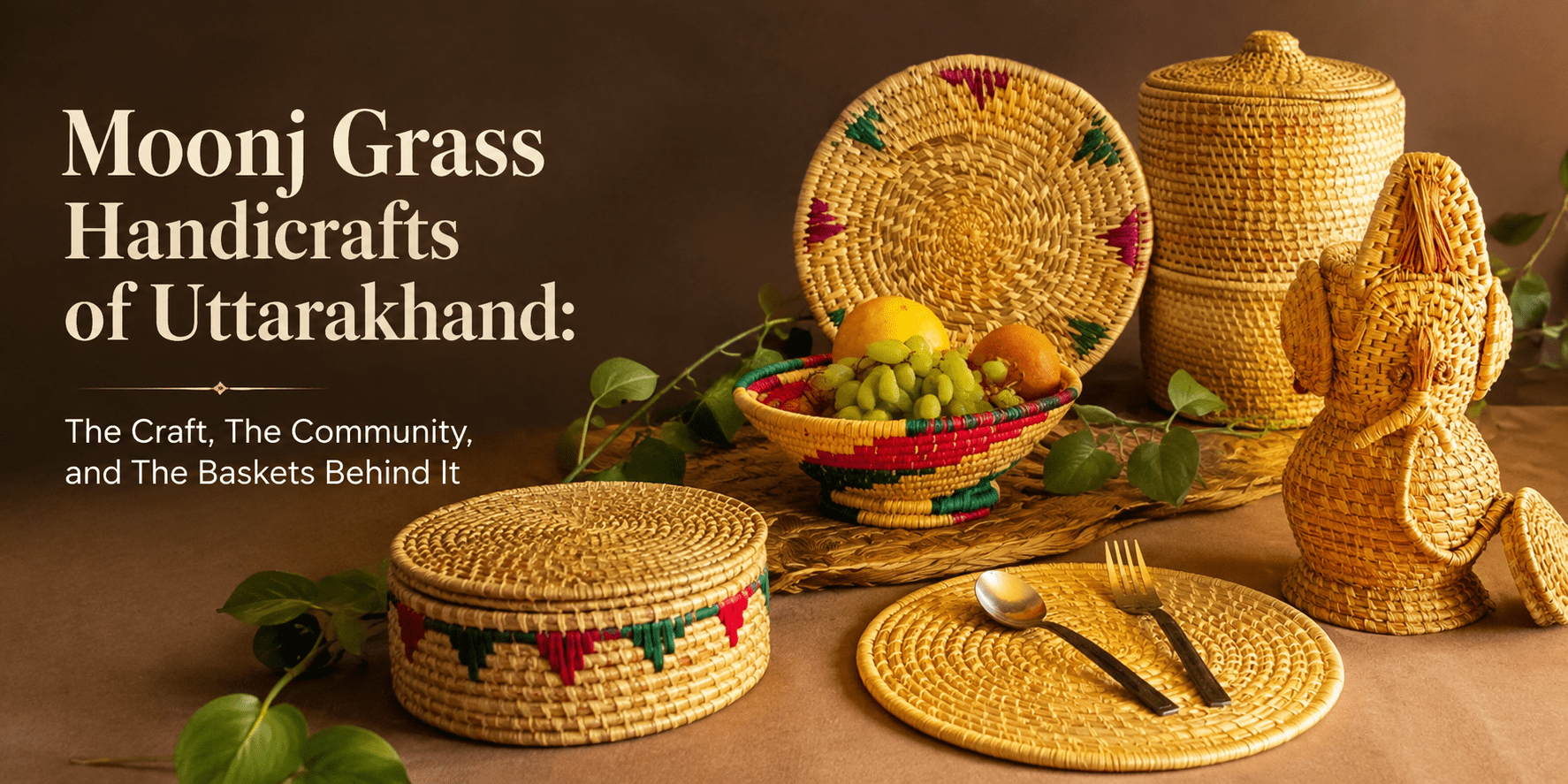
Walk along a riverbank or a quiet pond in the Terai belt of Uttarakhand, and you’ll spot a tall, wild grass swaying in the wind — unremarkable at first glance, but for generations, this grass has quietly held together entire artisan livelihoods. It’s called moonj grass, and in the hands of skilled weavers, it turns into baskets, mats, trays, and décor pieces that are as sturdy as they are beautiful.
Unlike most crafts that need expensive tools or imported material, moonj grass craft needs almost nothing but patience, skilled hands, and a grass that grows freely by the water. That simplicity is exactly what’s drawing renewed attention to it — in a world full of plastic storage and factory-made décor, something woven entirely by hand, from a plant that grew wild just outside a village, feels genuinely rare.
In this guide, we’ll walk through what this craft actually is, who weaves it in Uttarakhand, how it’s turned into everyday products, and why it deserves a spot in your home.
What Is Moonj Grass?
Moonj grass (botanically related to Saccharum munja) is a tall, wild perennial grass that grows abundantly along riverbanks, ponds, and other water bodies across northern India, including the Terai-Bhabar belt of Uttarakhand. It isn’t cultivated commercially — it simply grows wild, which is part of what makes moonj grass craft such a genuinely sustainable, low-impact tradition.
The plant itself has two usable parts: the tough inner stalk, which is strong enough for ropes and rough cordage, and the soft outer sheath — the actual “moonj” — which is peeled, dried, and woven into fine, flexible baskets and mats. Nothing about the plant goes to waste, which is worth remembering any time you come across the phrase “eco-friendly” used loosely elsewhere — here, it’s simply how the craft has always worked.
Alongside moonj grass craft, Uttarakhand’s artisans also work with a close cousin material — bamboo. If you’re drawn to natural fibre crafts, it’s worth browsing Baaduli’s Bamboo Handicrafts collection alongside our Handcrafted Moonj Grass Craft Products — both reflect the same philosophy of turning simple, locally available natural materials into lasting, functional pieces.
The Tharu Community: Uttarakhand’s Moonj Grass Weavers
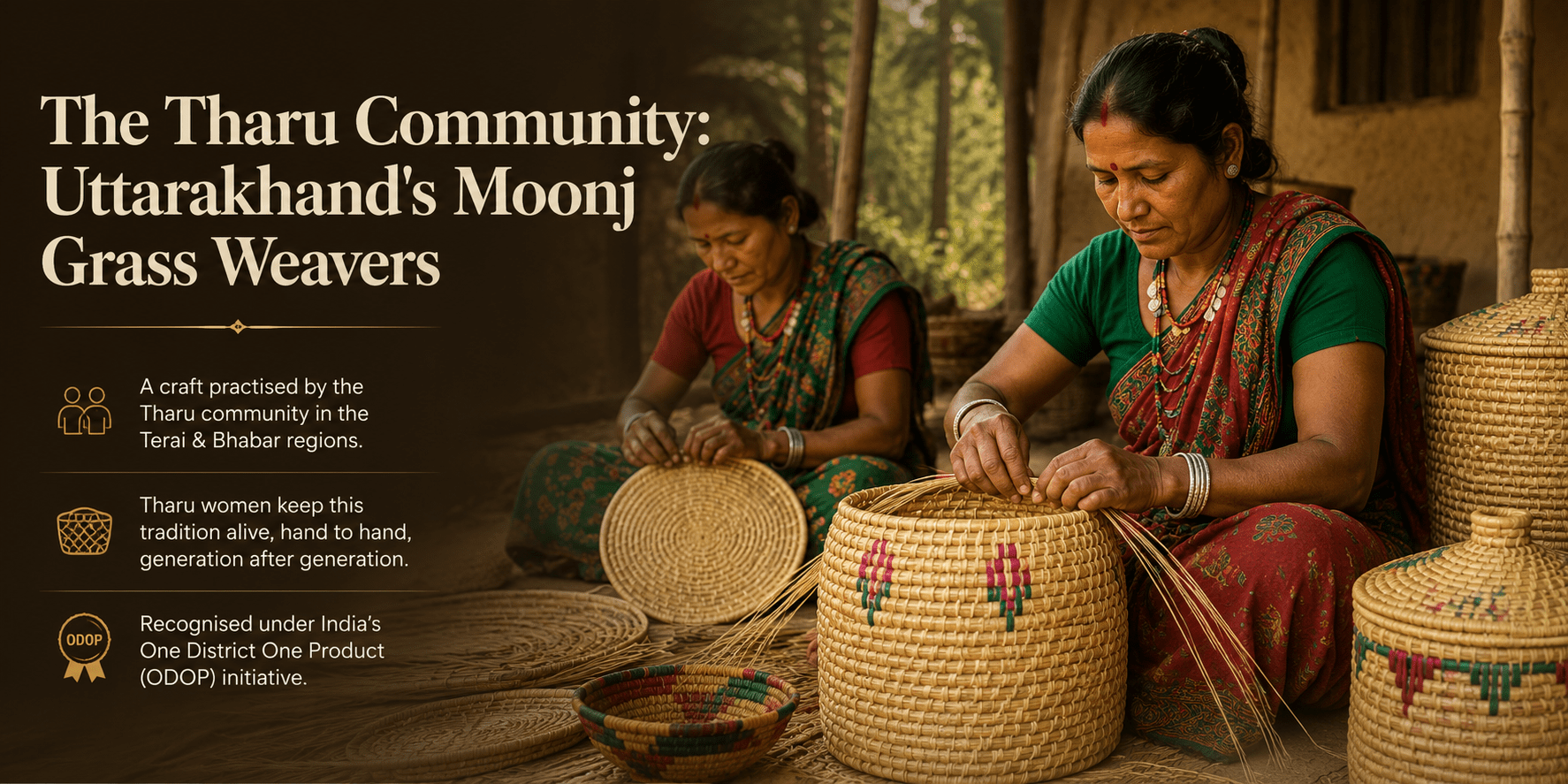
While moonj grass weaving is practised in pockets across Uttar Pradesh too, in Uttarakhand this craft belongs almost entirely to the Tharu community, settled in the Terai and Bhabar regions of Udham Singh Nagar district. The Tharu people describe themselves as “people of the forest,” and their relationship with this plant reflects exactly that — a deep, practical familiarity with what the land around them provides.
Tharu women are the primary keepers of this craft, weaving intricate baskets that carry real cultural weight — not just functional objects, but pieces woven for daughters as part of their wedding trousseau, passed down the same way a recipe or a lullaby might be. It’s a skill taught hand to hand, mother to daughter, over generations, rather than something learned from a manual.
This regional significance hasn’t gone unnoticed at the policy level either — moonj grass products from Udham Singh Nagar have been officially recognised under India’s One District One Product (ODOP) initiative, a government scheme designed to spotlight and support regionally distinctive crafts. You can read more about this recognition on the Government of India’s official ODOP portal.
Just as the Tharu community has kept this craft alive through generations of hand skill, other parts of Uttarakhand carry their own living crafts too — from hand-forged Brass Handicrafts in the hills to grass weaving in the plains, each rooted in a community that has protected it for decades.
How Moonj Grass Is Harvested and Woven
The process behind every moonj grass product is slower and more deliberate than most people realise — and that’s exactly why each piece feels different from anything factory-made.
Harvesting typically happens during and after the monsoon, when the grass is at its strongest. Only the central stem is picked, not the whole plant — a detail that takes real skill, since picking incorrectly can damage next season’s growth. Women often travel considerable distances from their villages, since moonj grass only grows near specific water bodies.
Drying comes next. The harvested grass is spread out under open sun for several days until it lightens in colour and becomes pliable enough to work with.
Shaving and dyeing follow — the outer sheath is separated from the tougher inner stalk, then dyed in bright, often natural colours before being left to dry once more.
Weaving is the final, most skilled stage. Using nothing but their hands, weavers braid, coil, and knot the prepared grass into baskets, trays, and mats — building patterns and motifs purely by feel and years of muscle memory, with no printed pattern or machine template involved.
The entire process, start to finish, can take several days for even a single basket — which is worth remembering the next time you compare a handmade piece to a machine-stamped one at a fraction of the price.
Popular Moonj Grass Products
Moonj Grass Baskets
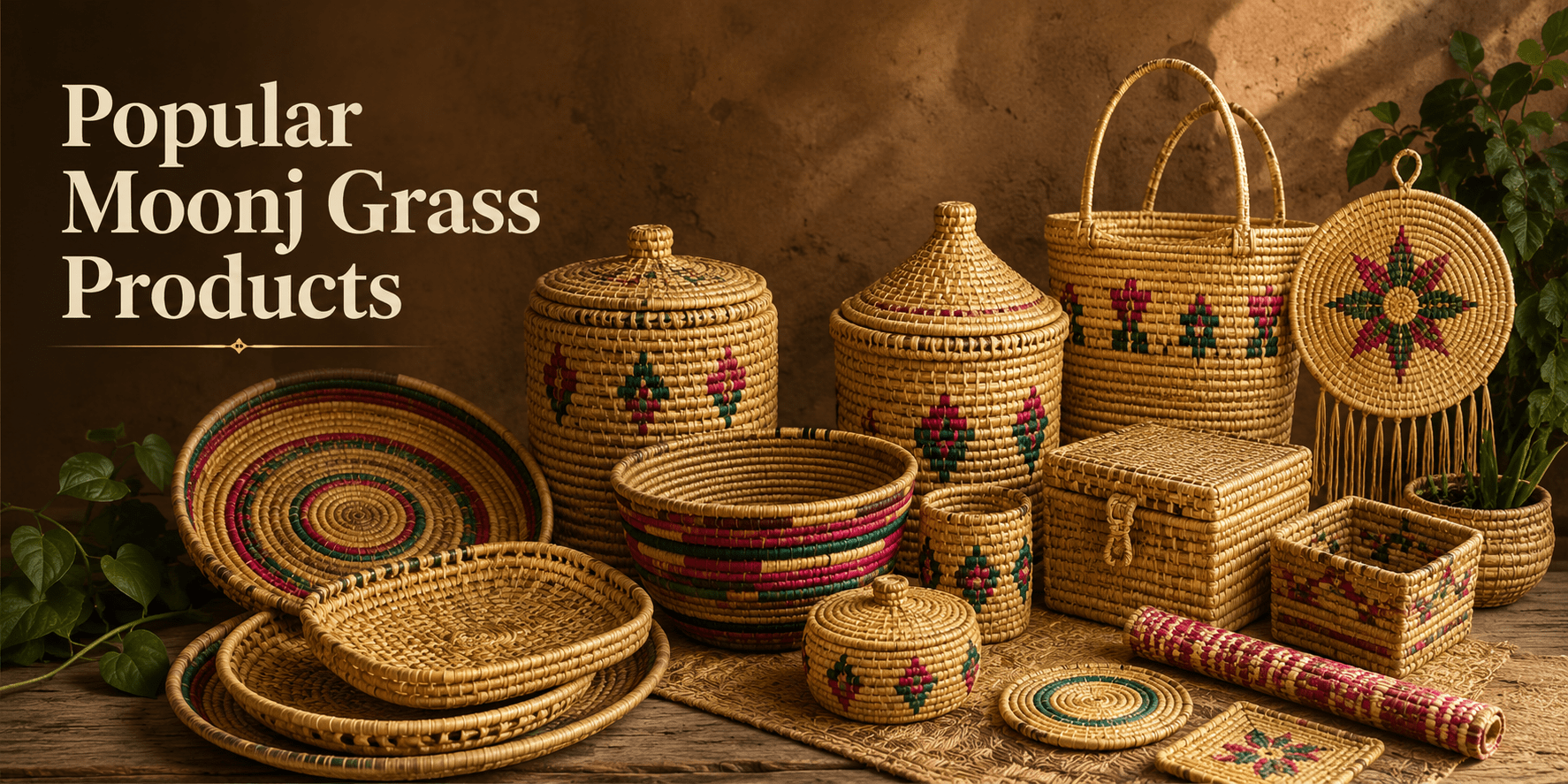
The moonj grass basket is by far the most iconic product of this craft — and for good reason. Traditionally used to store grains, flour, and fruit in the kitchen, these baskets range from small, simple everyday pieces to elaborately decorated ones made specifically for weddings and festive occasions. Their tightly coiled construction makes them surprisingly sturdy, often lasting years with basic care.
Moonj Grass Mats and Trays
Beyond baskets, moonj grass mats and serving trays are equally popular — flat-woven pieces used for everything from seating to table settings. Their natural texture and earthy tone make them a favourite for anyone looking to bring a bit of rustic, handmade warmth into modern interiors.
Everyday and Decor Moonj Grass Products
The range of moonj grass products has expanded well beyond traditional baskets. Today, artisans weave coasters, storage boxes, wall hangings, and even small planters and roti boxes — all functional, all biodegradable, and all built using the exact same techniques passed down for generations.
Why Moonj Grass Craft Is Genuinely Eco-Friendly
It’s easy for brands to slap “eco-friendly” onto anything these days, but moonj grass craft earns the label honestly. The raw material grows wild, without fertilizers, irrigation, or land clearing. Nothing synthetic goes into the weaving process. And at the end of a product’s life, it simply biodegrades — no microplastics, no landfill burden.
For anyone actively trying to move away from plastic storage containers and mass-produced décor, authentic eco-friendly handicrafts from Uttarakhand offer a genuinely practical alternative — not just a feel-good purchase, but products that hold up to daily use while leaving a far smaller footprint behind.
Moonj Grass Products at a Glance
| Product | Best Used For | Care Level |
| Basket | Kitchen storage, gifting, home décor | Low — dust regularly, keep dry |
| Mat | Seating, table settings | Low — wipe clean, air dry if damp |
| Tray | Serving, styling shelves | Low — dust with soft cloth |
| Storage Box | Pantry organisation | Low — avoid excess moisture |
| Wall Décor | Home styling, gifting | Very low — occasional dusting only |
Why Choose Baaduli for Authentic Moonj Grass Handicrafts
There’s a real difference between a basket picked up at a random store and one that comes directly from the Tharu weavers who’ve practised this craft for generations. At Baaduli, every piece is sourced directly from artisan communities in Uttarakhand, so what you’re bringing home isn’t just a storage basket — it’s a small, living piece of a tradition that’s been kept alive almost entirely by hand.
This same artisan-first approach runs across Baaduli’s wider collection too. Whether it’s woven moonj grass, natural bamboo, or hand-forged metalwork, every category reflects the same idea — that genuine craftsmanship, made slowly and by hand, deserves to be seen and used, not replaced by mass production.
How to Care for Moonj Grass Products
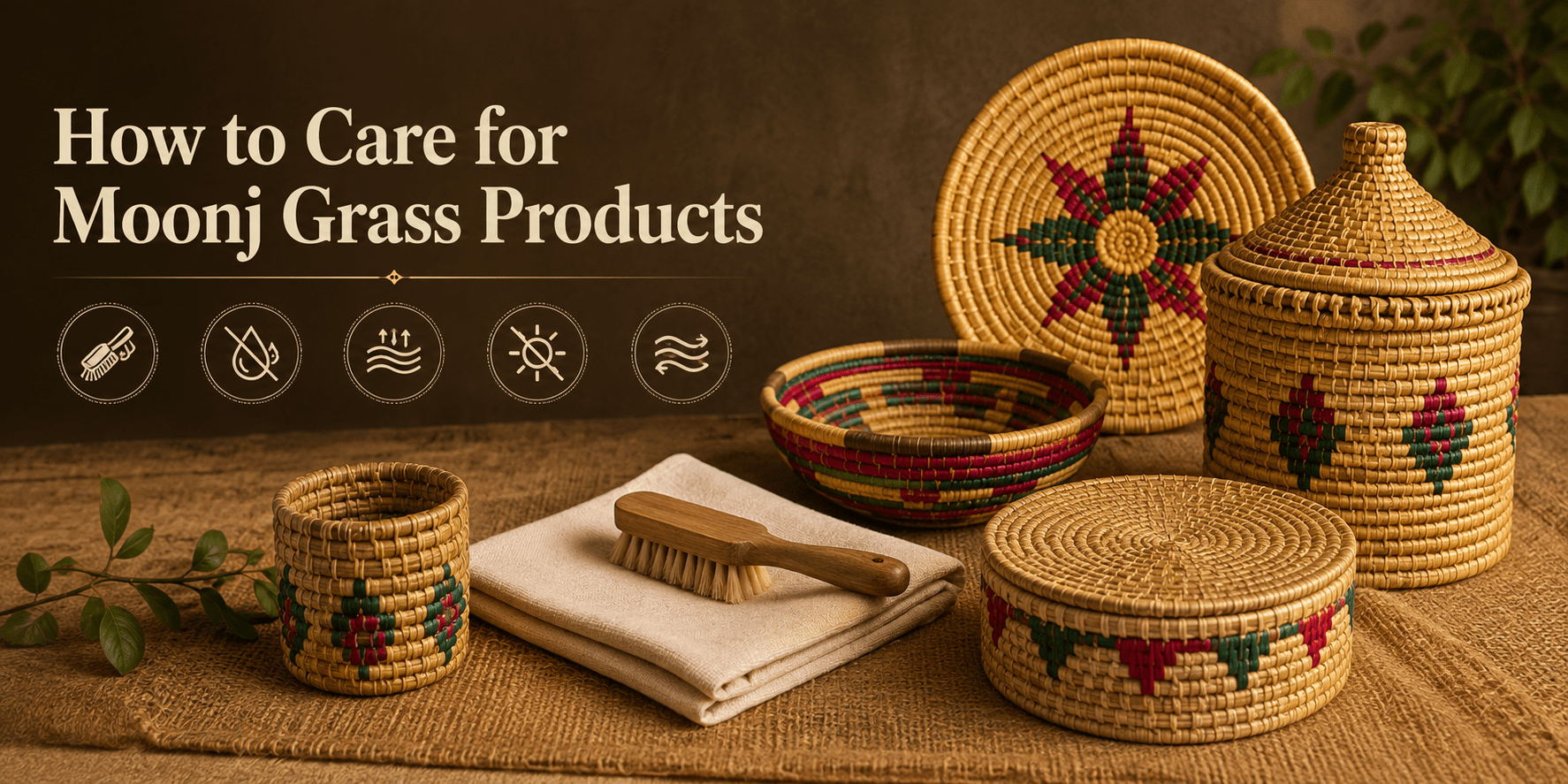
Moonj grass products are low-maintenance by design, but a little care goes a long way:
- Dust regularly with a soft, dry brush or cloth to keep the weave clean.
- Avoid prolonged moisture exposure — the fibre can weaken and develop mould if it stays wet for too long.
- If it gets damp, air-dry it fully in a well-ventilated space, away from direct sunlight.
- Keep out of harsh, direct sunlight for extended periods, as this can fade natural dyes and make the fibres brittle over time.
- Store in a dry place when not in use, ideally somewhere with good airflow.
With basic care, a well-made moonj grass basket can comfortably last for years, aging with character rather than falling apart.
FAQs
Q1. What is moonj grass?
Moonj grass is a tall, wild perennial grass that grows along riverbanks, ponds, and other water bodies in northern India, including Uttarakhand’s Terai-Bhabar belt. Its soft outer sheath is peeled, dried, and hand-woven into baskets, mats, and other everyday products.
Q2. What is moonj grass used for?
Moonj grass is primarily woven into baskets, mats, trays, and decorative items. It’s also used to make ropes and cordage from its tougher inner stalk.
Q3. Who weaves moonj grass products in Uttarakhand?
In Uttarakhand, moonj grass weaving is practised mainly by the Tharu community in the Terai-Bhabar region of Udham Singh Nagar district, largely by women who’ve learned the craft across generations.
Q4. Is moonj grass craft actually eco-friendly?
Yes. The grass grows wild without any need for fertilizers or irrigation, and the finished products are fully biodegradable, making it one of the more genuinely sustainable natural fibre crafts in India.
Q5. How long do moonj grass baskets last with proper care?
With basic care — keeping them dry and dusted regularly — a well-made moonj grass basket can easily last several years of regular use.
Q6. What’s the difference between moonj grass baskets and bamboo baskets?
Moonj grass baskets are woven from a soft, coiled plant fibre and tend to be lighter and more flexible, while bamboo baskets use a stiffer, woodier material, giving them a sturdier, more rigid structure.
Q7. Can moonj grass get wet, or is it waterproof?
Moonj grass isn’t waterproof. It can handle light, occasional contact with moisture, but prolonged wetness can weaken the fibres or lead to mould, so it’s best kept dry and air-dried promptly if it does get damp.
Q8. Is moonj grass craft officially recognised as a regional product?
Yes. Moonj grass products from Udham Singh Nagar, Uttarakhand are officially recognised under India’s One District One Product (ODOP) initiative, a government scheme that supports and promotes regionally distinctive crafts.
Q9. Can moonj grass products be used for daily kitchen storage?
Yes, many moonj grass products like storage boxes and roti containers are specifically designed for everyday kitchen use and are food-safe when kept dry.
Q10. Where can I buy authentic moonj grass handicrafts online?
Baaduli offers a curated range of authentic moonj grass products sourced directly from artisan communities in Uttarakhand.
Bringing a Piece of Uttarakhand’s Craft Home
Moonj grass isn’t just a wild plant growing by the water — it’s the raw material behind a tradition that has quietly sustained artisan families in Uttarakhand for generations. Every basket, mat, and tray carries the imprint of the hands that made it, shaped without a single machine involved.
Choosing authentic moonj grass products means choosing something genuinely sustainable, genuinely handmade, and genuinely rooted in Uttarakhand’s living heritage. Explore Baaduli’s collection of moonj grass handicrafts and bring home a craft that’s been shaped by hand, not by factory.
