
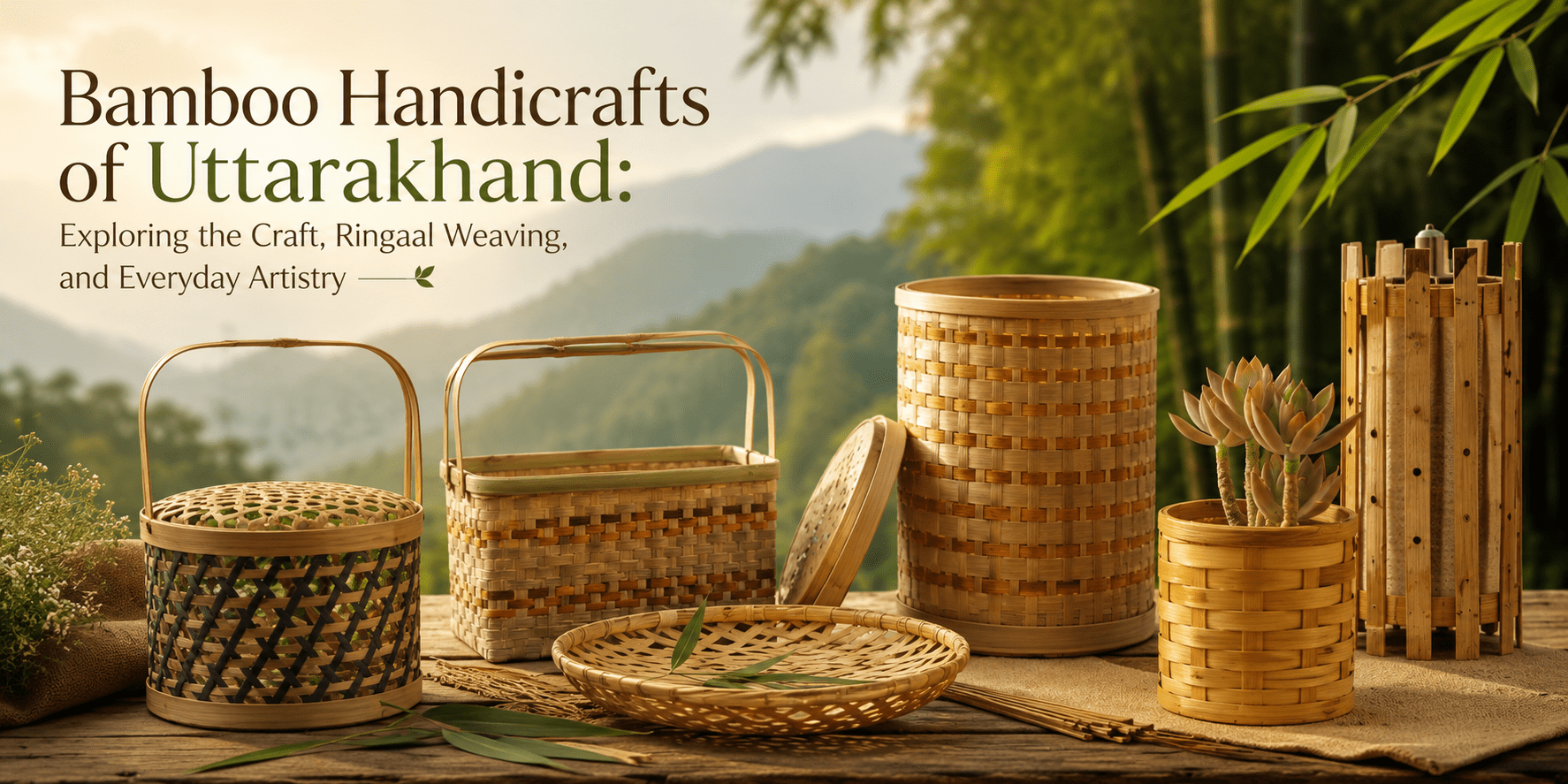
There’s something quietly satisfying about an object that started life as a plant growing wild in a forest and ended up as a basket sitting in your kitchen. That’s the story behind most bamboo handicrafts — humble, practical, and shaped almost entirely by hand, long before “sustainable living” became a trend people had to remind themselves to practice.
Bamboo has been part of Indian households for centuries, and for good reason. It’s strong, it grows fast, it needs no chemical treatment to become usable, and it biodegrades naturally once its life is done. But what often gets lost in broader conversations about this craft is that different regions of India shape this material in completely different ways — and Uttarakhand’s version, built around a distinct hill bamboo called Ringaal, rarely gets the attention it deserves.
In this guide, we’ll look at what makes this craft genuinely special, how Uttarakhand’s own Ringaal weaving tradition fits into that story, and which products are worth knowing about if you’re looking to bring authentic, handmade craftsmanship into your home.
What Makes Bamboo a Popular Handicraft Material
Before getting into any regional specifics, it helps to understand why bamboo has remained a go-to material for artisans across India for generations.
It’s fast-growing and renewable. Unlike hardwood, which can take decades to mature, bamboo regenerates quickly, making it one of the more genuinely sustainable raw materials available to craftspeople.
It’s naturally strong yet flexible. Bamboo can be split into thin, pliable strips without losing structural strength — which is exactly what makes it so versatile for weaving baskets, mats, furniture, and even lighting.
It requires no synthetic processing. Most traditional bamboo weaving involves nothing more than harvesting, drying, splitting, and weaving — no chemical treatments, no plastic coatings, nothing that compromises its biodegradability.
It’s genuinely versatile. From baskets and trays to lamps, planters, and storage boxes, there’s very little bamboo can’t be shaped into in the hands of a skilled weaver. If you want to see this range for yourself, Baaduli’s Bamboo Handicrafts Products collection brings together everything from everyday utility items to decorative home pieces, all handcrafted by artisans working with this material directly.
Ringaal: Uttarakhand’s Own Bamboo Craft Tradition
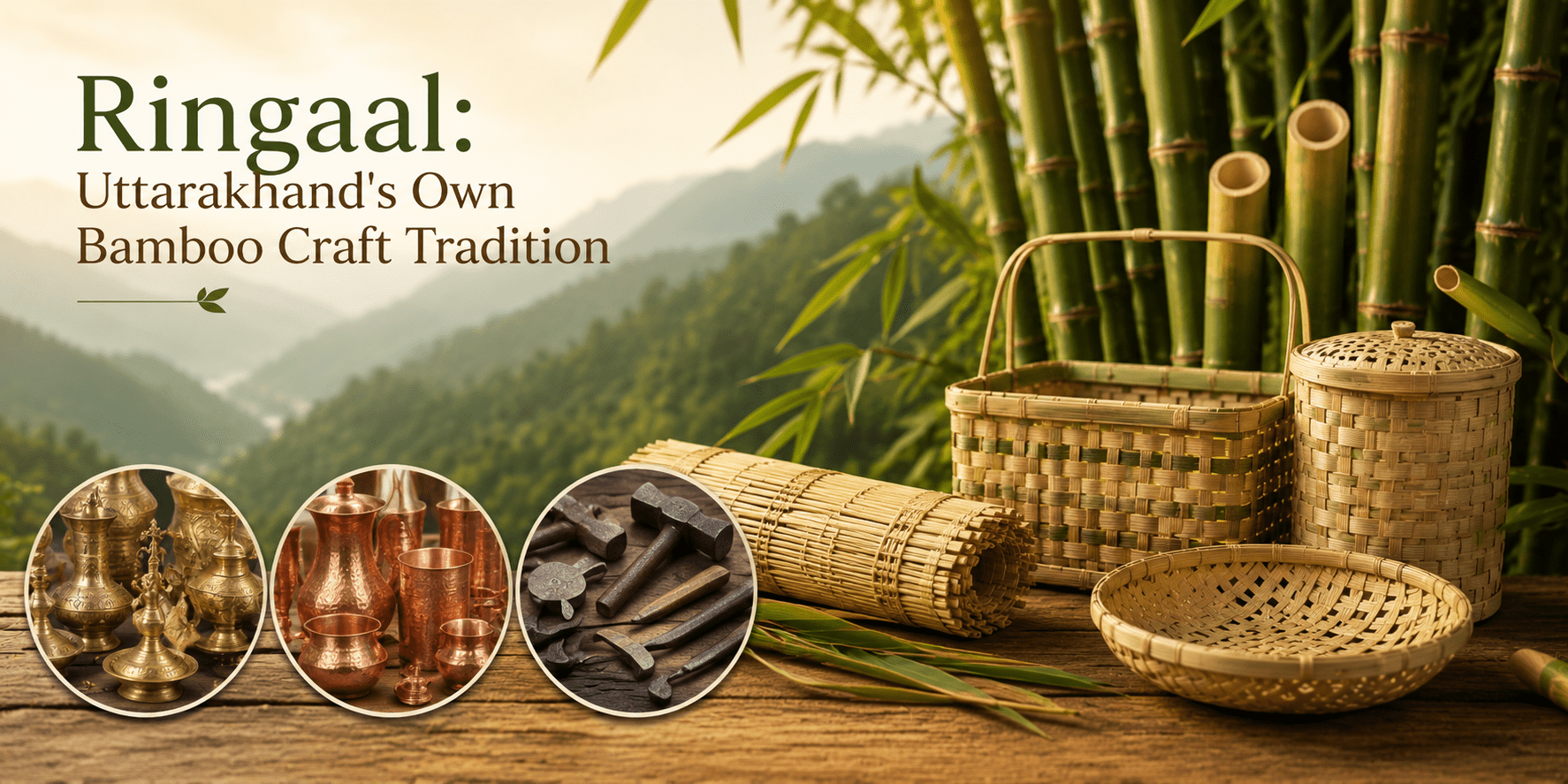
Here’s something most general articles on bamboo handicrafts in india completely miss — Uttarakhand has its own distinct bamboo tradition, built around a hill species called Ringaal. Unlike the taller bamboo varieties associated with Assam or West Bengal, Ringaal is a dwarf bamboo native to the Himalayan slopes, growing wild across the Kumaon and Garhwal regions at altitudes between 3,000 and 5,000 feet.
There are actually two main varieties artisans work with — Kathin Ringaal (or Ghad Ringaal), a coarser type found at lower altitudes, and the finer Dev Ringaal, which grows higher up and is prized for more delicate, detailed weaving work. Local farmers traditionally harvest Ringaal from the forest between October and November, then take up basket-weaving through the winter months, when there’s less agricultural work to do in the fields.
This craft has been documented and formally recognised by India’s own Ministry of Textiles — you can read more about it on the official Uttarakhand Ringal Craft page hosted by the Government of India.
Ringaal weaving sits alongside a handful of other heritage crafts that Uttarakhand’s artisan communities have kept alive for generations — from hand-forged Brass Handicrafts and Copper Handicrafts in the metalworking villages of the hills, to hand-hammered Iron Handicrafts still made the traditional way. Each of these crafts tells a slightly different version of the same story — skilled hands, local materials, and techniques rarely written down, only passed on.
How Bamboo & Ringaal Handicrafts Are Made
The process behind a genuine handwoven bamboo or Ringaal piece is slower than most people realise, and that’s exactly what gives it character.
Harvesting comes first — bamboo or Ringaal stalks are cut at the right maturity, since younger stalks are too soft and older ones become brittle. For Ringaal specifically, altitude plays a role too, with the finer Dev Ringaal only usable from higher elevations.
Splitting follows. The stalk is divided into thin strips, and excess fibre is scraped away to leave a smooth, workable surface. Strips are sorted by width, since different parts of a basket — the base, the walls, the rim — need different thicknesses.
Weaving is where the real skill shows. Artisans start with a sturdy base, then build up the sides using techniques like twill weaving or hexagonal patterns, finishing with a reinforced rim made from thicker splits. For some pieces, the inner splits are deliberately blackened using fire, or dyed in natural colours, creating light-and-dark contrast patterns purely through the arrangement of strips.
No printed template, no machine stamping — every pattern comes from the weaver’s own hands and years of practiced memory.
Popular Bamboo & Ringaal Handicraft Products
Bamboo Home Decor and Utility Items
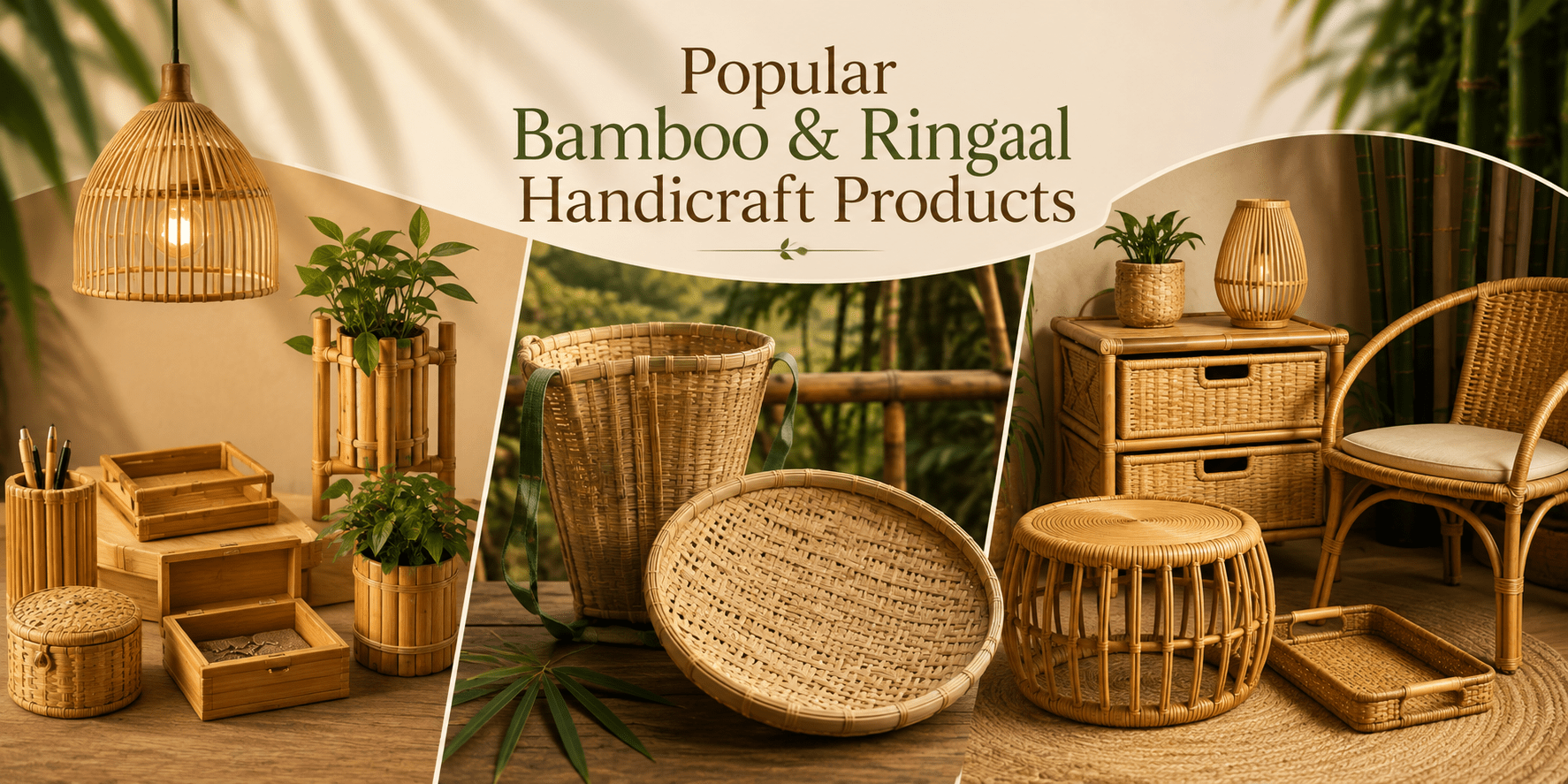
Modern bamboo handicraft products go well beyond baskets. Think planters, hanging lamps, pen stands, jewellery boxes, and table organisers — functional pieces that bring warmth and texture into a home without leaning on plastic or synthetic materials.
Ringaal Baskets: Kandi and Suppa
Two traditional Ringaal products worth knowing specifically are the Kandi basket, a sturdy carrying basket traditionally used for transporting firewood, produce, or household goods, and the Suppa, a hand-woven winnowing tray still used in many hill households to separate grain from chaff. Both are humble, everyday objects — but woven entirely by hand, using techniques that have barely changed in generations.
Bamboo and Cane Furnishings
Beyond small utility items, cane and bamboo handicrafts also extend into furnishings — stools, trays, storage units, and light fixtures that combine bamboo’s natural flexibility with genuine durability, offering a warmer, more organic alternative to standard furniture materials.
Why Bamboo Handicrafts Are a Sustainable Choice
It’s worth being specific about why this craft genuinely deserves the “sustainable” label, rather than just wearing it as a marketing word.
Bamboo (and Ringaal specifically) grows without needing fertilizers, pesticides, or irrigation — it simply regenerates naturally in its native habitat. The weaving process itself uses no synthetic adhesives or chemical treatments, relying purely on the plant’s own structural strength. And at the end of its usable life, a genuine bamboo or Ringaal product breaks down naturally, unlike plastic storage alternatives that persist in landfills for decades.
For anyone actively trying to reduce plastic in their home — from kitchen storage to décor — authentic bamboo products offer a genuinely practical swap, not just a symbolic one.
Bamboo & Ringaal Handicrafts at a Glance
| Product | Material | Best Used For | Care Level |
| Kandi Basket | Ringaal | Carrying goods, storage | Low — keep dry, dust regularly |
| Suppa (Winnowing Tray) | Ringaal | Grain processing, decor | Low — wipe clean, avoid soaking |
| Utility Baskets | Bamboo | Home organisation, gifting | Low — dust with soft cloth |
| Hanging Lamps/Planters | Bamboo | Home décor, lighting | Very low — occasional dusting |
| Bamboo Furnishings | Bamboo/Cane | Seating, storage furniture | Low — avoid prolonged moisture |
Why Choose Baaduli for Authentic Bamboo & Ringaal Handicrafts
There’s a clear difference between a mass-produced bamboo item and one woven by an artisan who learned the craft from their own family. At Baaduli, every bamboo and Ringaal piece is sourced directly from artisan communities in Uttarakhand, so what you’re bringing home isn’t just a basket or a lamp — it’s a small continuation of a craft tradition that’s survived almost entirely through hands-on skill, not machinery.
This same philosophy runs through Baaduli’s wider collection too — whether it’s woven bamboo, hand-forged brass, hammered copper, or traditional iron work, every category reflects the same commitment: genuine, regionally rooted craftsmanship that deserves to be used, not replaced by factory production.
How to Care for Bamboo & Ringaal Products
Bamboo and Ringaal handicrafts are naturally low-maintenance, but a bit of care extends their life considerably:
- Dust regularly with a soft, dry cloth or brush to keep the weave clean.
- Keep away from prolonged moisture — while bamboo can handle occasional dampness, extended wet exposure can weaken fibres or lead to mould.
- Air-dry fully if a piece does get wet, away from direct sunlight.
- Avoid harsh, direct sun for extended periods, which can dry out and crack natural bamboo fibres over time.
- Store in a dry, well-ventilated space when not in regular use.
With this basic care, a well-made bamboo or Ringaal piece can comfortably last for years without losing its shape or strength.
FAQs
Q1. What are bamboo handicrafts?
Bamboo handicrafts are handmade products woven or crafted from bamboo, ranging from baskets and mats to furniture, lamps, and décor items, made using traditional techniques passed down through artisan communities.
Q2. What is Ringaal, and how is it different from regular bamboo?
Ringaal is a dwarf bamboo species native to Uttarakhand’s Kumaon and Garhwal hills, distinct from the taller bamboo varieties found in states like Assam or West Bengal. It’s specifically used for traditional basketry in the region.
Q3. Are bamboo handicrafts in India only made in the northeast?
No. While Assam, Tripura, and West Bengal are well-known bamboo craft hubs, several other regions — including Uttarakhand with its Ringaal tradition — have their own distinct bamboo weaving practices.
Q4. What is a Kandi basket used for?
A Kandi basket is a traditional Ringaal basket used in Uttarakhand’s hill households for carrying firewood, produce, and other goods, valued for its strength and durability.
Q5. Are bamboo handicraft products eco-friendly?
Yes. Bamboo grows without needing fertilizers or heavy irrigation, requires no synthetic processing to be woven, and is fully biodegradable at the end of its usable life.
Q6. How long do bamboo and Ringaal products typically last?
With basic care — keeping them dry and dusted — bamboo and Ringaal handicrafts can comfortably last several years of regular use.
Q7. What’s the difference between cane and bamboo handicrafts?
Cane is generally more flexible and often used for furniture that needs bending, like chairs and stools, while bamboo is stiffer and better suited to structural items like baskets, trays, and panels.
Q8. Can bamboo handicrafts be used daily, or are they only decorative?
Many bamboo and Ringaal products, like baskets and trays, are built for genuine daily use and are sturdy enough to handle regular handling and storage tasks.
Q9. Is Ringaal basketry a dying craft?
Ringaal basketry has declined in some areas as artisans move toward other livelihoods, but it’s still actively practiced in parts of Kumaon and Garhwal, and is officially documented by India’s Ministry of Textiles as a recognised regional craft.
Q10. Where can I buy authentic bamboo and Ringaal handicrafts online?
Baaduli offers a curated range of authentic bamboo and Ringaal handicrafts sourced directly from artisan communities across Uttarakhand.
Bringing Bamboo Craftsmanship Home
Bamboo craftsmanship carries a kind of quiet honesty that’s hard to replicate with factory-made alternatives — a material grown wild, shaped entirely by hand, and built to outlast most modern substitutes. Uttarakhand’s Ringaal tradition adds its own regional chapter to that story, one that’s been kept alive by hill artisans through generations of patient, practiced skill.
Choosing authentic bamboo and Ringaal products means choosing something genuinely sustainable and genuinely handmade. Explore Baaduli’s collection of bamboo handicrafts and bring home a piece of craftsmanship shaped by hand, not by machine.
